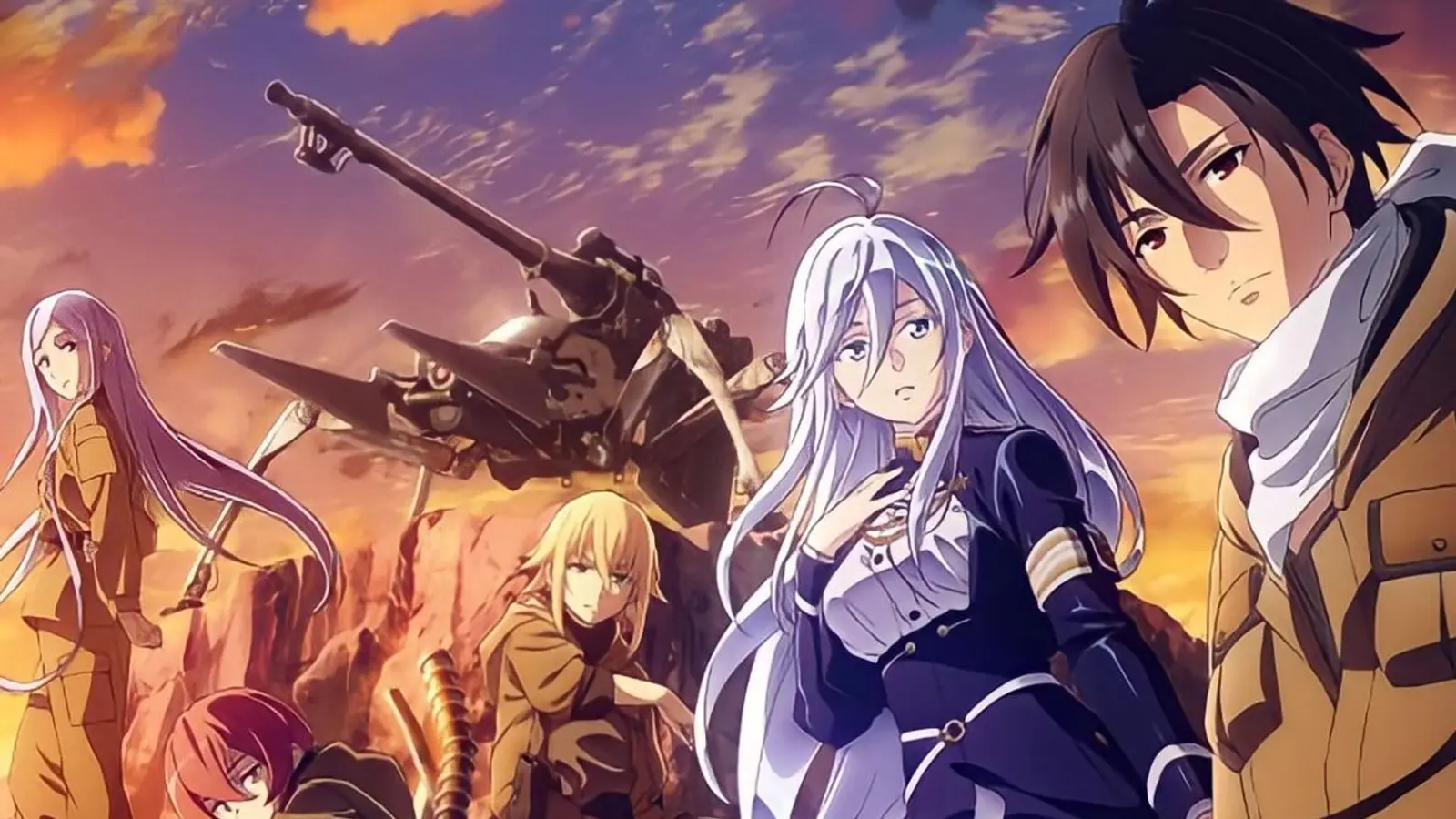
Every few months, anime social media rediscovers 86 Eighty-Six and asks the same question: why did almost nobody watch this? The replies fill with people insisting it is a masterpiece, quoting Shin’s quiet devastations, posting screenshots of Lena crying in a command room. And then the cycle ends, and the general audience moves on to whatever is trending that season, and 86 goes back to being the best war anime that most viewers have never finished.
I want to change that, or at least try. Because 86 is not merely underrated — it is one of the most complete emotional arguments the mecha genre has produced this decade, and it has spent five years being treated like a cult curiosity instead of a landmark.
A war story built on a lie
The premise is simple and nasty. The Republic of San Magnolia claims to be fighting a war against the autonomous Legion with zero human casualties. That claim is a lie. The drones are piloted by the Eighty-sixers — people stripped of citizenship, names and rights because of their heritage, sent to die in “unmanned” units so the Republic can keep its hands rhetorically clean.
The story runs on two tracks. Lena is a privileged Republic handler, young, idealistic and initially naïve about the machinery she is part of. Shin is the captain of the Spearhead Squadron, an Eighty-sixer who has survived longer than anyone should and carries the dead with him in a way the series makes horribly literal. Their radio conversations across a border that should not exist are the spine of the whole show.
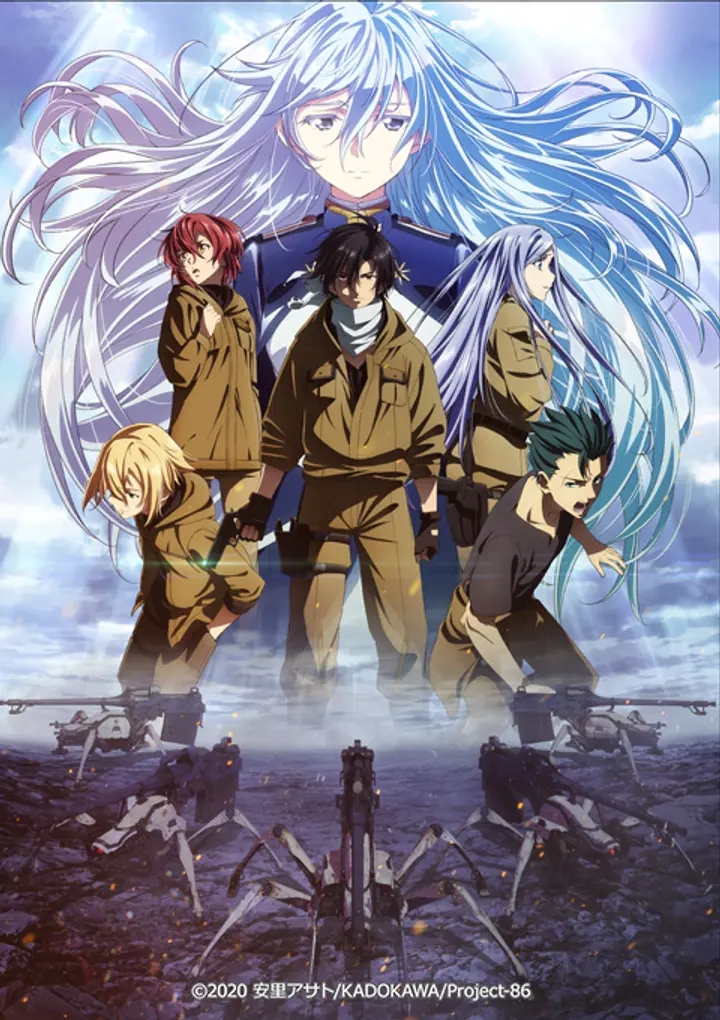
That structure is what makes 86 sharper than most war anime. It refuses to let the audience stay comfortable. Lena’s guilt is not resolved with a speech; Shin’s trauma is not healed by friendship. The series keeps asking what sympathy is worth when it arrives from the safe side of a fence.
Why did it slip past everyone?
So why did 86 never get the audience it deserved? Several reasons, and they compound each other.
First, the timing was brutal. The first cour aired in spring 2021, and its second half was delayed to October that year by production issues. In the modern watch-cycle, where a series lives or dies on its first three weeks of discourse, splitting a season in half is close to fatal. By the time 86 returned with its strongest material, the conversation had moved on.
Second, the title is actively hostile to discovery. “86 Eighty-Six” tells you nothing, is awkward to search, and reads like a serial number unless you already know the premise. Compare that with the instant genre pitch of its contemporaries. Great shows die of bad names more often than the industry admits.
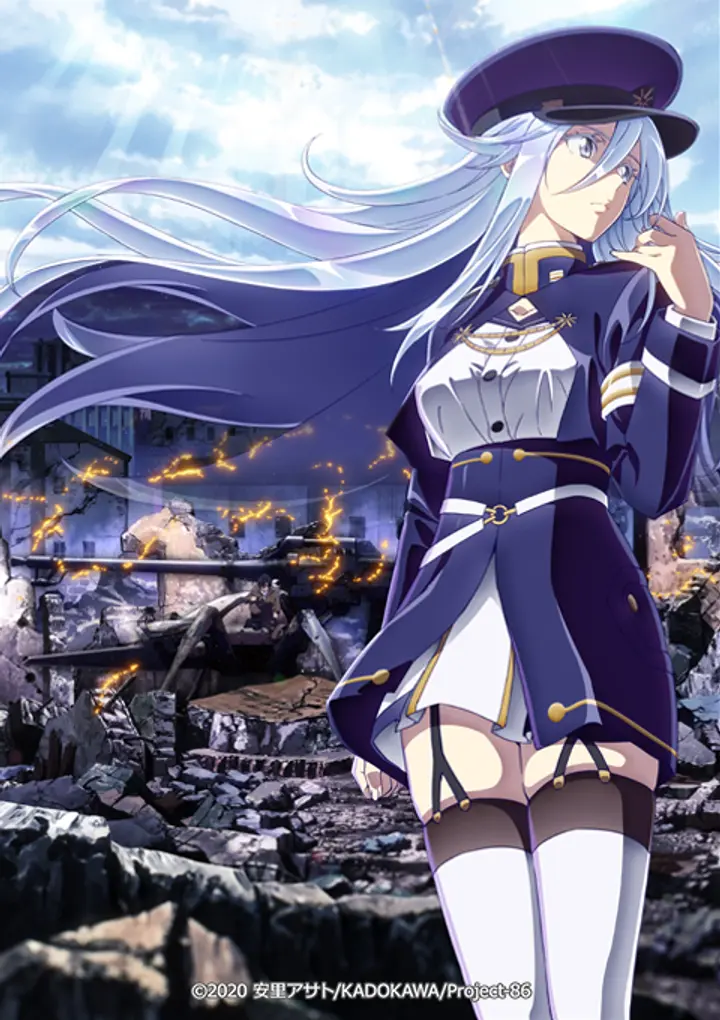
Third, the marketing sold the wrong show. The key visuals led with Lena and the mecha, which invited “another grim war anime” shrugs. What 86 actually is — a character drama about dehumanisation, propaganda and the cost of paying attention — is much harder to put on a poster.
Fourth, and most honestly: 86 is demanding. It is a slow burn that spends whole episodes on squad banter, political cowardice and quiet dread before it pays anything off. It asks you to care about characters the narrative has already told you are treated as disposable. Viewers who want weekly catharsis bounce off it, and I understand why. The payoff is enormous, but you have to earn it.
What puts it in the top tier
When 86 does land its hits, almost nothing else compares. The final stretch of the first cour — the deployment beyond the reconnaissance zone, the squad’s last march, that episode — is one of the great sequences in modern anime, staged with a confidence that borders on cruel. A-1 Pictures’ direction, the sound design, and Hiroyuki Sawano and Kohta Yamamoto’s score turn what could have been standard war tragedy into something that physically resets your expectations for the genre.
The writing deserves particular credit for its discipline. 86 never sentimentalises its cast. The Spearhead squadron members joke, flirt, bicker and dream about cake because that is what people do at the edge of death — and the series trusts you to understand the horror without underlining it. When a character disappears, there is no lingering musical eulogy. They are gone, the war continues, and the silence does the work.
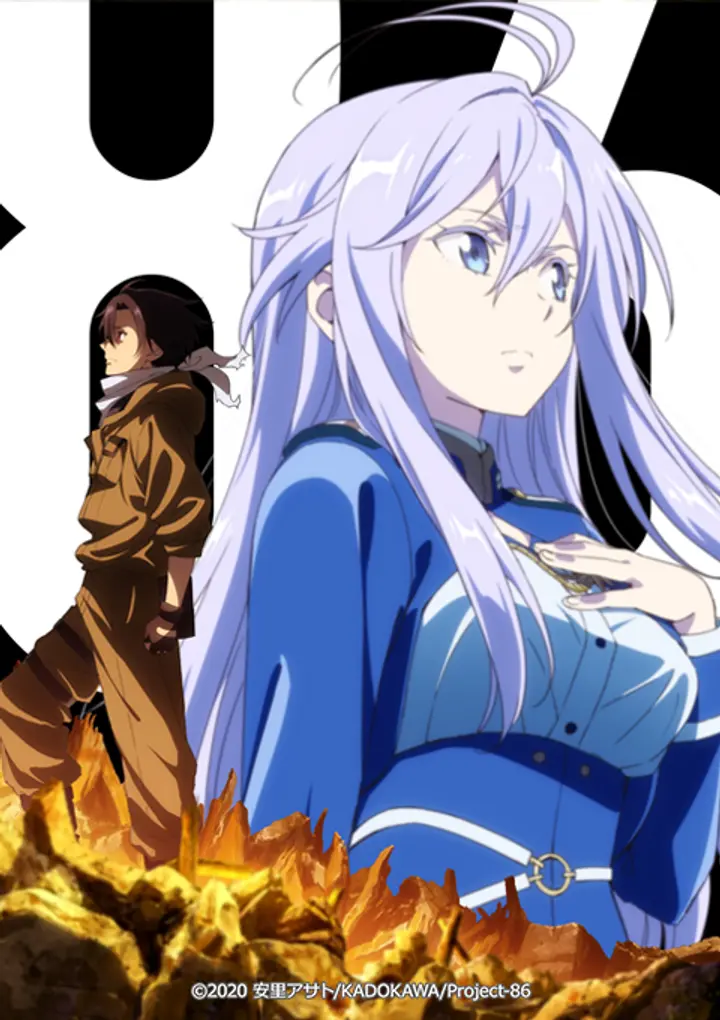
Lena’s arc is the other half of the argument. Her journey from someone who is against injustice to someone who acts against it is drawn with unusual realism. Sympathy, the show keeps insisting, is not the same as solidarity — and watching Lena learn the difference is as satisfying as any battle in the series.
It is also, for my money, the rare modern mecha show that genuinely earns its comparisons to the classics. ScreenRant argued that 86 stands alongside Neon Genesis Evangelion as one of the greatest mecha anime ever made, and while that framing is deliberately provocative, the comparison is not silly. Evangelion turned the mecha inward, making the robot a container for depression and self-loathing. 86 turns it outward, making the drone a container for institutional racism and managed indifference. They are mirror images of the same question: what does it do to a person to be used as a tool?
The right entry point
If you have been meaning to watch 86, this is the moment. Both cours are streaming, the film-length recap of the final arc is available, and the light novels — the source material by Asato Asato, with illustrations by Shirabii — are published in English by Yen Press, so the story continues well past the anime’s ending.
Go in knowing three things. The show starts slow by design. The second half is where it becomes extraordinary. And the final episode of the second cour is one of the best episodes of television the genre has produced, full stop.
Fair warning: the emotional damage is cumulative. 86 does not hit hard once and let you recover. It hits quietly, repeatedly, and then hands you a small moment of warmth precisely so the next hit lands harder. Watch it with someone you trust.
The final word
86 Eighty-Six is the rare series that is both genuinely great and genuinely overlooked, and the reasons it was overlooked — a split season, a terrible searchable title, marketing that undersold it, pacing that demands patience — have nothing to do with its quality.
The genre does not need saving. But its memory is short, and shows like 86 are exactly the ones that fall through it: too serious to be meme material, too quiet to trend, too good to forget for the people who finished it. If you have ever complained that anime plays it safe, here is a series that did not, waiting for you to notice.
More people should watch 86. Not because it is underrated as a badge of honour, but because it is a war story with something to say and the craft to say it properly. The audience that finds it now will wonder, correctly, why nobody made them watch it sooner.