Funbarus plush toys inspire a two-minute TV anime
Dreams’ posture-support plush series becomes a two-minute short on 3 October, made with a hybrid 2D and AI production process.
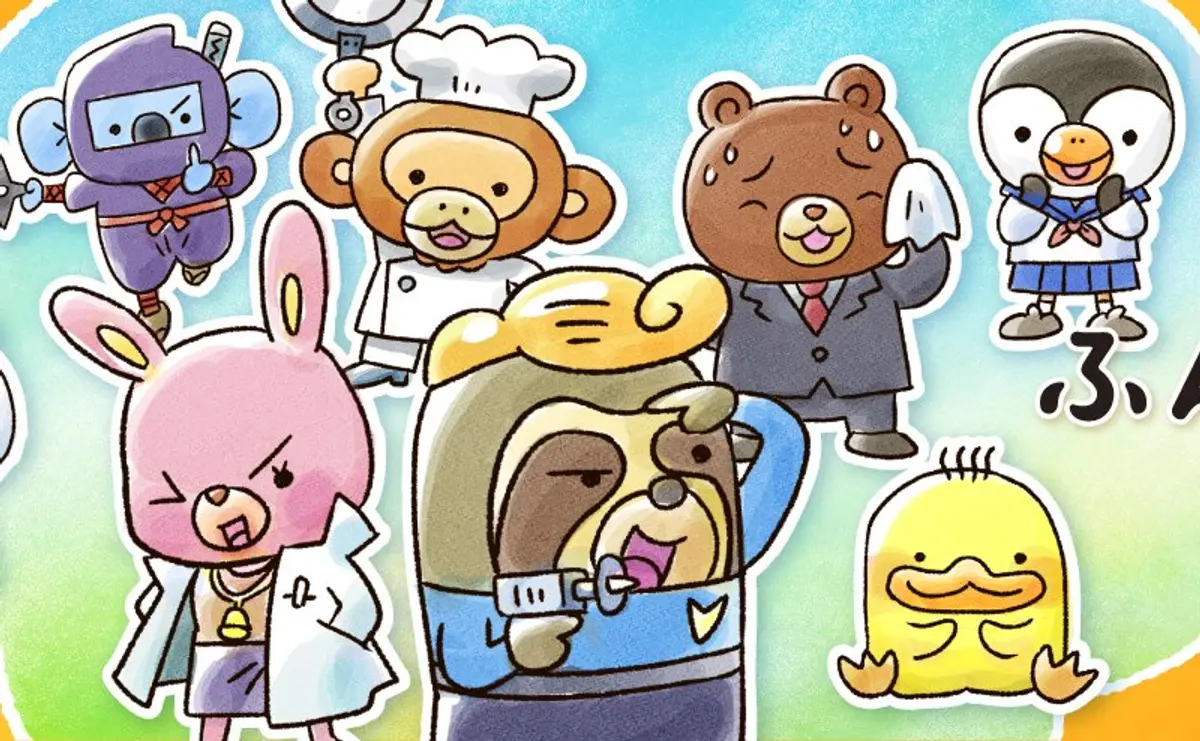
Dreams is turning its Funbarus posture-support plush toys into a short anime, and it will be made with a hybrid 2D and AI production process.
What's actually going on
The two-minute short premieres on 3 October 2026 at 11:25 p.m. JST on BS Yoshimoto, then on 5 October at 9:54 p.m. on Tokyo MX. The company also announced the cast, staff and an image song, “Kimi ni BUMP”, performed by the hip hop group Ketsumeishi.
The production method is the unusual part. According to the announcement, key animation drawings are created from the planning documents, storyboards, and character and art designs using conventional 2D techniques. 3D CG and what the announcement calls “AI digital techniques” are then used to generate the animation sequences — a process described as a full “2D x AI hybrid”.
The story follows Nossori, a sloth who works hard for humans and listens idly to their conversations, which in turn feed his imagination. The cast includes Wataru Komada as Nossori, Kōtarō Nishiyama as Montan the monkey, Sayuri Hara as Hop the rabbit, Kenta Miyake as Brownie the Bear, Kento Shiraishi as Pentan the Penguin, Hayato Kimura as Shaomaru the Panda, Ai of the comedy duo Yoneda 2000 as Johnny the Duck and Hiroaki Tajiri as Zūzū the Koala. Additional roles include Kōki Miyata, Mitsuhiro Sakamaki, Nanami Yamashita, Madoka Asahina and Shiho Hisajima as narrator, with Shotaro Uzawa, Taiga Takano, Nene Hieda and Makoto of Yoneda 2000 voicing the humans.
Kazumi Nonaka is directing at MI Co. Episodes are built around weekly mini-segments, including comedy from Yoneda 2000, a music video for the Ketsumeishi song and behind-the-scenes talk with the cast using Funbarus puppets.
Why you should care
The production claim is the real story here. Broadcast anime in Japan has been extremely cautious about AI-assisted pipelines, and a television slot on BS Yoshimoto and Tokyo MX attached to a process described this way is a notable test case. The 2D key animation is still drawn traditionally, so this is not a fully generated show, but the sequences in between are where the industry has been most anxious about cost and craft.
The subject matter fits the experiment neatly. Funbarus are posture-support plush toys — small characters designed to sit on a desk and encourage you not to slouch — so the anime exists to sell comfort objects to office workers, and a two-minute format built from short segments suits that purpose better than a conventional series.
For viewers outside Japan, availability is the open question. Broadcast shorts like this often surface on streaming platforms later, sometimes regionally, but nothing has been announced.
Our opinion
A two-minute short is a sensible place to trial an AI-assisted pipeline. The commercial stakes are low, the format is forgiving, and the audience is not tuning in expecting hand-crafted nuance. If the hybrid process produces something watchable, the technique will move on to bigger projects — and if it does not, a plush-toy anime is a cheap place to have found out.
The behind-the-scenes segments are a smart addition, too. Production stories are catnip for the animation audience, and putting the cast in front of Funbarus puppets gives the show a second reason to exist beyond two minutes of sloth daydreaming. Worth watching for the process as much as the story.
Sources: Dreams; PR Times.