Goodbye, Lara gets a Saburouta manga from October
Kinema Citrus' mermaid anime lands a manga adaptation from Citrus creator Saburouta, with the first chapters due on KadoComi in October.
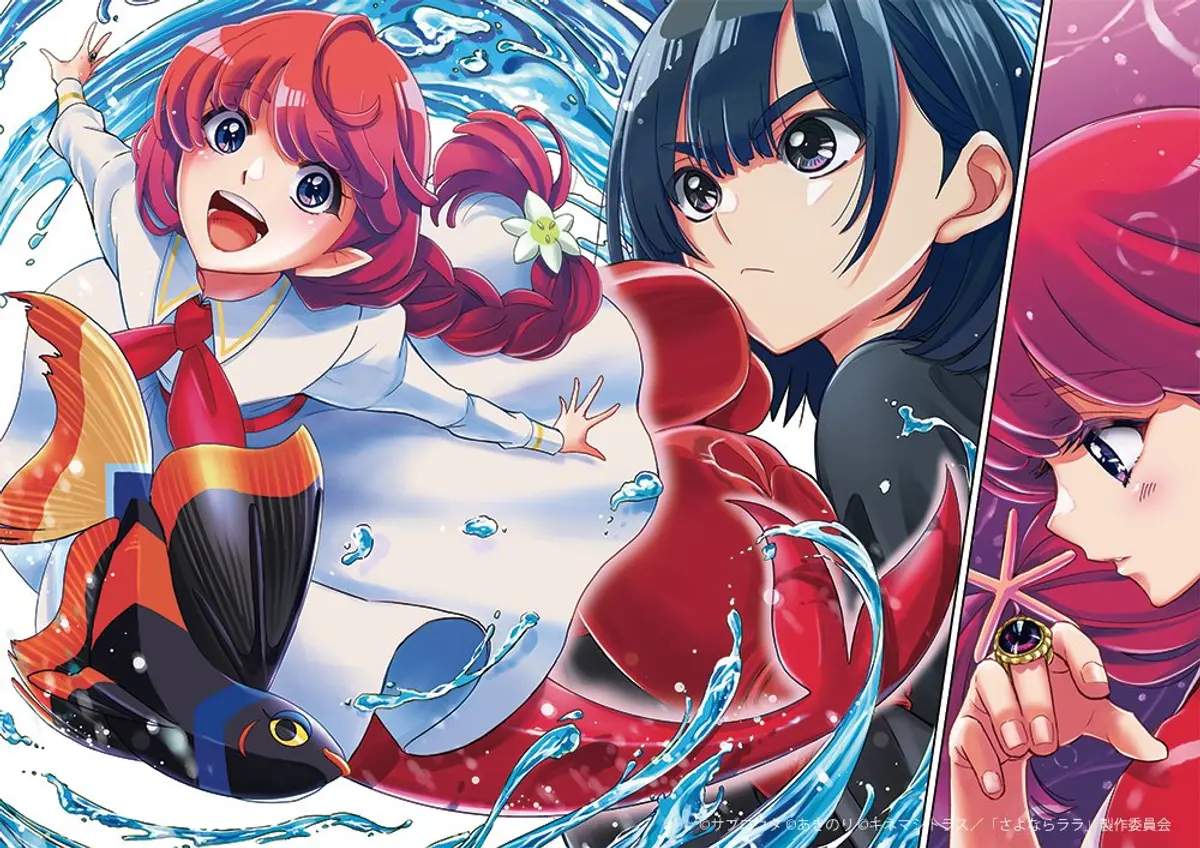
The Goodbye, Lara anime is getting a manga adaptation. The show's own channels confirmed on 15 September that Saburouta, the creator of Citrus, will draw it for Kadokawa's KadoComi platform, with a planned start in October.
Goodbye, Lara, known in Japan as Sayonara Lara, is an original series from Kinema Citrus, the studio behind Made in Abyss.
What's actually going on
The manga retells the same story: Lara, a mermaid princess, gives up her tail for a human prince, and then waits two centuries before waking in Lake Biwa with one last chance at love. The anime opened on 5 July in Japan's late-night slot on Tokyo MX, with BS Asahi, YTV and AT-X also carrying it, and Crunchyroll streams it as it airs.
Saburouta is a pointed choice. Citrus became one of the most recognisable yuri romances of the past decade, and handing this adaptation to its creator suggests a production committee that wants the property to keep drawing readers long after its broadcast run ends.
Why you should care
Manga adaptations have become the standard second life for an original anime. They are cheap next to another cour, they keep a title on shelves between seasons, and they give a studio's own property a route into bookshops that a streaming licence never quite manages.
There is a catch for readers outside Japan. KadoComi is a Japanese-language platform and no English edition has been announced, so UK and US readers are waiting on a separate licensing decision that has not been made public yet.
Our opinion
Adapting an original anime into a comic is often an exercise in tidying up somebody else's homework, but this one has a real reason to exist. Saburouta's Citrus was built on restraint, on longing held at arm's length for years, and that is close to exactly the register Goodbye, Lara needs. A heroine who has already lost her prince and is running out of time is a slow-burn romance with a deadline attached, and few artists working today handle that particular ache better. The risk is pacing: a monthly-style schedule asks readers to hold a story whose whole engine is momentum, and the anime's best trick, its drifting and waterlogged sense of time, does not survive a panel grid unless the adaptation is content to be quieter than its source. We would rather see it try than not.