Ranma 1/2 season three posts its creditless opening and ending
The third season of Ranma 1/2 has released creditless versions of both its themes, with Sunao Miman by Fumino and Kawaikunai by Yuika now available without the credit roll.
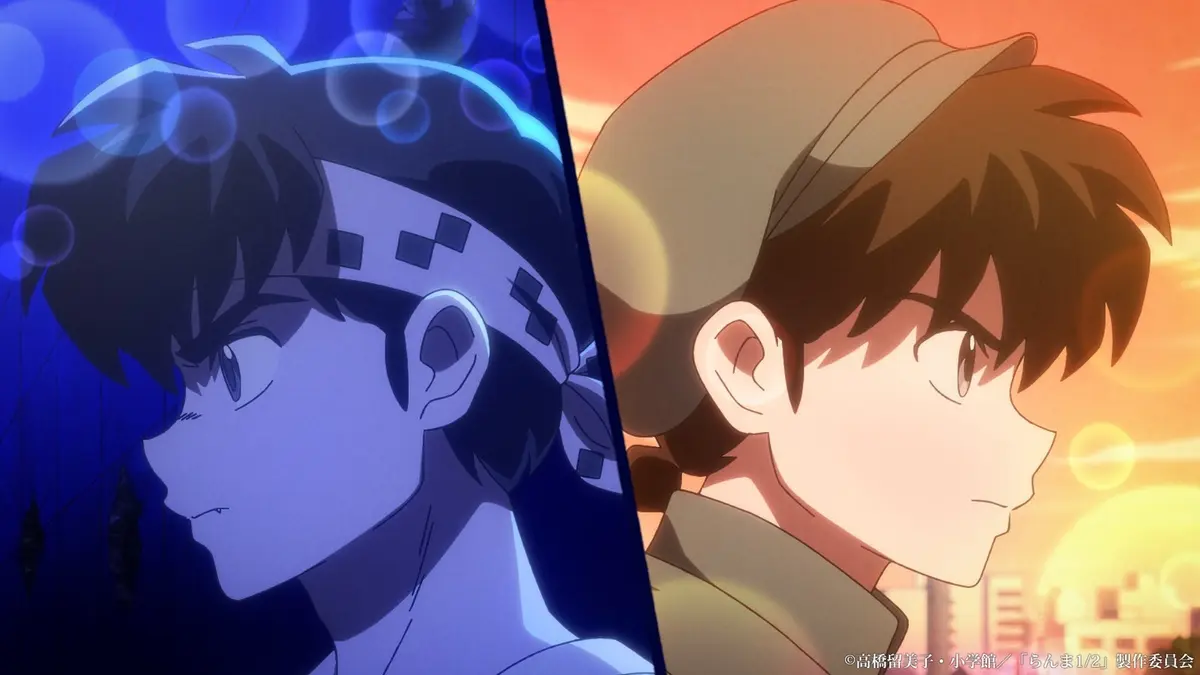
The third season of Ranma 1/2 has published creditless versions of both of its themes, a day after the show returned to Japanese television.
Both themes, without the credits
The clean opening carries Sunao Miman by Fumino and the clean ending carries Kawaikunai by Yuika, both in television length. The production released the pair on 4 October, the morning after episode one went out at 00:55 JST on Nippon TV, where the season now sits in a Saturday late-night slot.
A dinner table, then a fight
The opening video begins at the Tendo family dinner table and works through the returning cast before folding in the characters that season three is adding. Its chorus stages a fight between Ranma Saotome and Ryoga Hibiki, the rivalry the new run is leaning on early.
Pastel frames for the ending
The ending is again the work of the illustrator Minami Kitamura, whose run on the previous two seasons set the show's softer closing register. Her frames follow the relationship between Ranma and Akane Tendo, then widen to the rest of the ensemble, with Shampoo, Mousse, Cologne, Ryoga, Kasumi, Nabiki, Genma in his panda form, Soun Tendo, Ukyo Kuonji and Tsubasa Kurenai all looking up at the same sky. Illustrations are by F*kaori, drawn in a lighter touch than the series itself.
The same team behind it
Konosuke Uda directs, Kimiko Ueno handles series composition and Hiromi Taniguchi designs the characters, with Kaoru Wada composing and MAPPA animating. Shogakukan-Shueisha Productions is the planning and production house.
Where to watch
Season three began on 3 October and airs on Nippon TV and its affiliates on Saturdays at 00:55, with each episode landing on Netflix immediately after the broadcast. The previous two seasons used the same window.
Our opinion
A creditless cut is a commercial confession. A studio does not strip its own credits for the viewer's convenience; it does it so the song's label has a clean asset, and so a theme can live on YouTube as a music video that happens to be animated. Season three has three things to sell in Fumino, Yuika and its own nostalgia, and two clean videos are the cheapest way to point a fandom at all of them at once. What rescues the exercise is that the ending uses its freedom well. Handing the close back to Minami Kitamura and letting the whole cast gather under one sky treats the ending as the one place a comedy this broad is allowed to be sincere. The opening has the harder brief, since it has to sell a dinner table and a fight in ninety seconds, and it manages both without the credits to hide behind.