The Blue Road brings a cross-border murder case to Netflix
Netflix's Korean-Japanese crime series The Blue Road, adapted from a 2002 manhwa, arrives on 20 November with a poster and a first trailer.
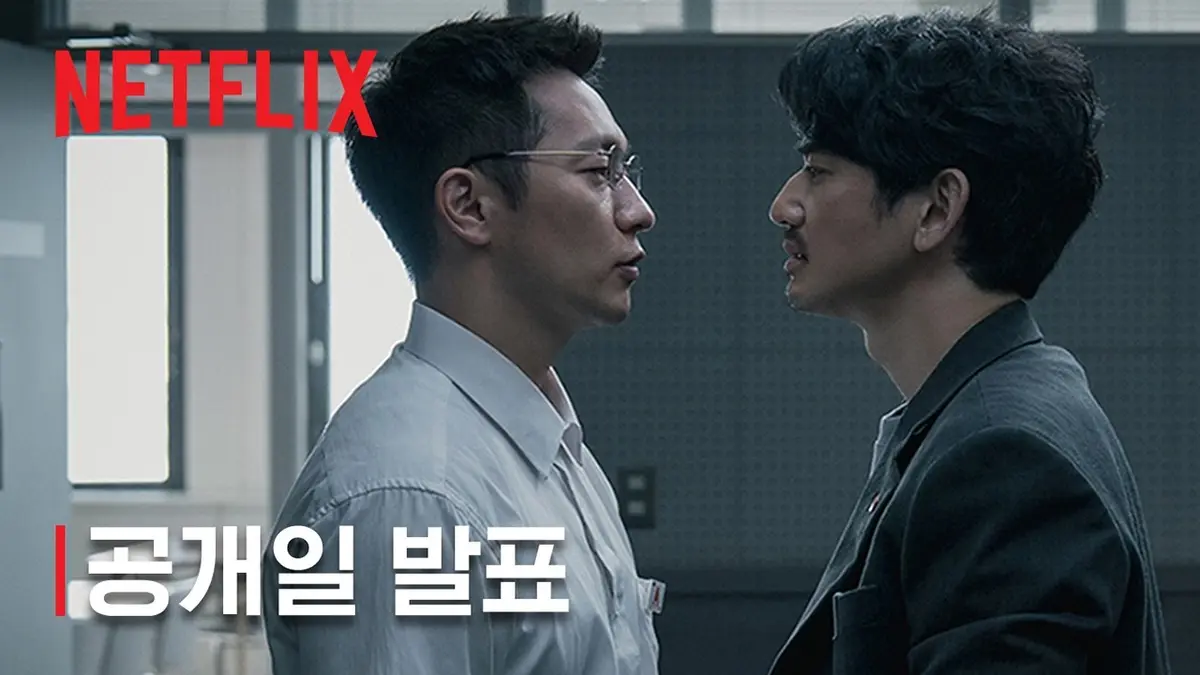
Netflix has put a date on its Korean-Japanese crime series. The Blue Road, previously developed under the working title Road, will premiere on 20 November, and the service has released a first poster and trailer to go with the announcement.
The series is a live-action adaptation of a manhwa, and it is built around a case that refuses to stay inside one country. Two detectives, one Korean and one Japanese, are forced to work together on a string of murders that crosses the border between them.
Who is making it and who is in it
The director is Joon-hee Han, whose previous work includes D.P. and Coin Locker Girl. Seok-gu Son plays Seok Kim, a detective with the Seoul Metropolitan Police Agency, while Eita Nagayama plays Inose of the Tokyo Metropolitan Police Department. The two characters work in different ways and do not much like each other, which is the engine of the story rather than a decoration on it.
What the trailer shows
The first trailer leans on the crime scenes rather than the cast list. It shows messages written in the victims' blood, a Korean-Japanese businessman played by Shin-rok Kim, and a mysterious tiger drawing, with the tension between the two detectives rising as the cases stack up. The poster puts Son and Nagayama in back alleys in Korea and Japan, with messages in both languages written on the walls behind them.
The comic behind it
The adaptation draws on Purungil – Ao no Michi (Blue Road), a 2002 Korean-Japanese collaborative comic written by Keishi Edogawa and drawn by the Korean artist Kaya Kwon. It ran to five volumes and mixed hard-boiled crime with the friction of cross-border cooperation. The story opens in Tokyo, where a contorted corpse is found with a message written in Korean, then repeats itself in South Korea with a Japanese message nearby, until both countries have to admit the killings are linked.
Our opinion
Cross-border procedurals live or die on the friction between their leads, and casting Son and Nagayama opposite each other is the strongest decision in this announcement. The risk sits in the source material: a story written in 2002 about two police forces learning to cooperate can read as a period piece in 2026, and the trailer's blood-written messages edge toward the lurid. If Han keeps the focus on the two men rather than the gimmick, this is a strong addition to Netflix's Korean crime slate.
The scheduling also tells its own story. Announcing the date with a poster and a trailer already cut, months after production was confirmed, suggests the series is finished and waiting rather than racing a deadline. For a project that has to sell subtitled crime to audiences in two markets at once, having the time to get it right matters more than an early date.