Fate/Zero gets its first Fuji TV selection broadcast
Aniplex has shown the ufotable-drawn artwork that unites Witch on the Holy Night with Fate/Zero, and set a four-night Fuji TV run whose episodes viewers will choose.
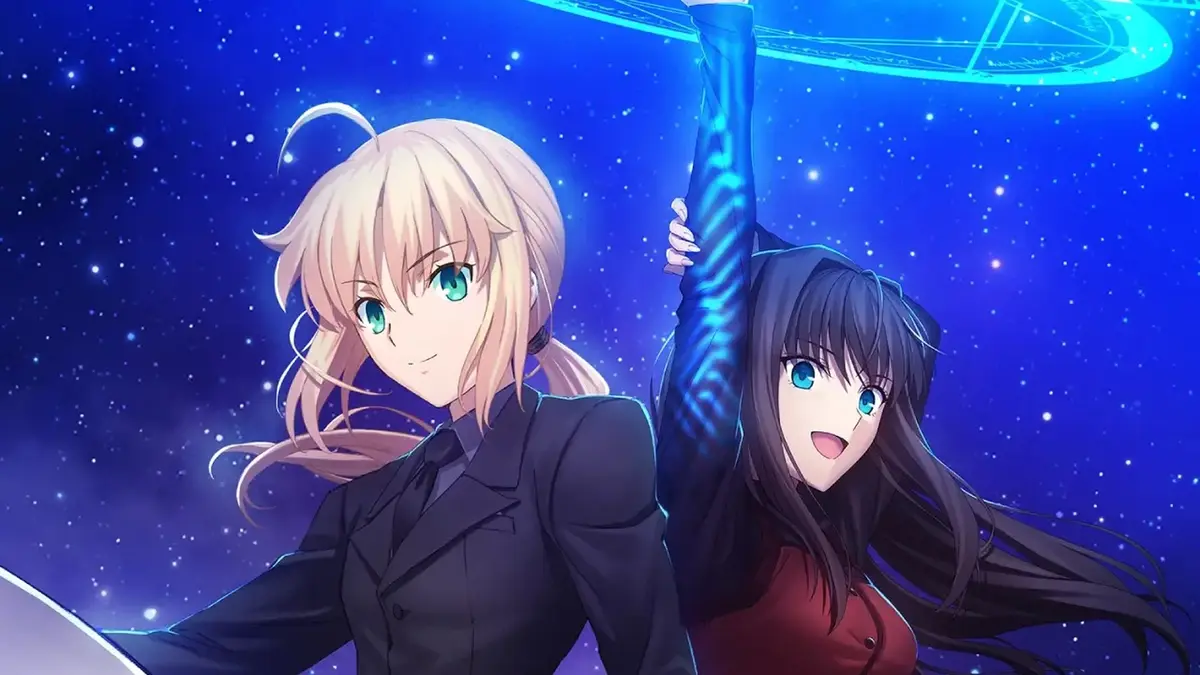
Aniplex has shown the collaboration artwork that ties the Witch on the Holy Night film to Fate/Zero, and confirmed that the 2011 series will get its first selection broadcast on Fuji TV — four late-night slots in November, with the episodes chosen by a public vote.
Four nights, decided by viewers
The run is the first time Fate/Zero has been given a selection broadcast on Fuji TV, and it is built around the audience rather than a fixed schedule. Viewers pick from all 25 episodes of the series, with one vote per person per day between 1 and 11 October on the film site's own vote page, and the most popular episodes fill the slots. The broadcasts are set for 2 November (25:45–26:45), 4 November (26:45–27:45), 11 November (25:45–26:45) and 13 November (25:45–26:45), all Kanto-local.
New art, drawn by ufotable
The visual is new work by ufotable, drawn for the pairing of the Witch on the Holy Night cinema release with the 15th anniversary of Fate/Zero's television run. Fate/Zero reached that anniversary on 1 October 2026. Both the artwork and the broadcast sit inside 「みんなで観よう!TYPE-MOON × ufotable」 — roughly, “let us watch together” — the retrospective project Aniplex opened at the end of September to move parts of the two studios' back catalogue into wider streaming.
Where else to watch
ABEMA will carry a full run of Fate/Zero from 10 October, spreading all 25 episodes across 12 days on its anime live channel. Witch on the Holy Night itself opens in Japanese cinemas on 20 November, with supercell's 「夜と青」 (Yoru to Ao) as its theme song.
Our opinion
A 15-year-old series getting its first terrestrial outing is a smaller event than the anniversary framing suggests, and the interesting decision here is the vote. Letting viewers choose which of 25 episodes earn a television slot turns a cheap back-catalogue run into something resembling programming: the schedule becomes a summary of what people remember rather than what a distributor thinks they should. It also quietly acknowledges how Fate/Zero is actually watched now. Few arrive at episode one and march forward; most come for a specific duel, a specific argument on a rooftop, a specific ending. The risk is that a public vote produces a greatest-hits reel of the same three episodes everyone already clips, and that the broadcast ends up confirming the consensus instead of widening it. Four slots is enough to be wrong about that, and not much room to be interesting.